We all know that depleted uranium is not armour piercing in itself, that it’s the fissile tip that matters, a fissile tip added at the front of a depleted uranium arrow or ballast. And that steel behind the tip will allow for a faster ammunition, compensating for weaker mass at impact through faster kinetics. Hence a much longer range and better armour piercing, especially if the DU in the competing ammunition is sheared. All of this is confirmed by NATO.
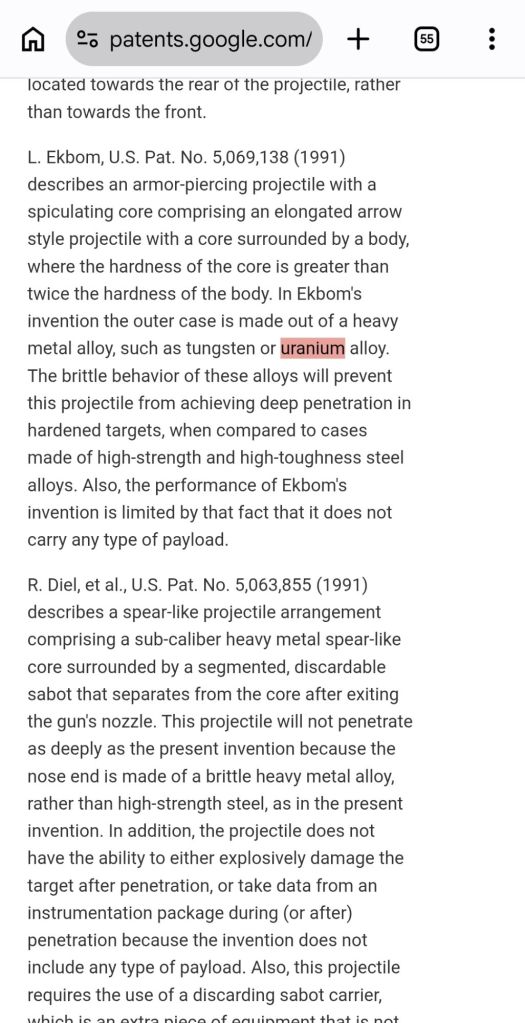
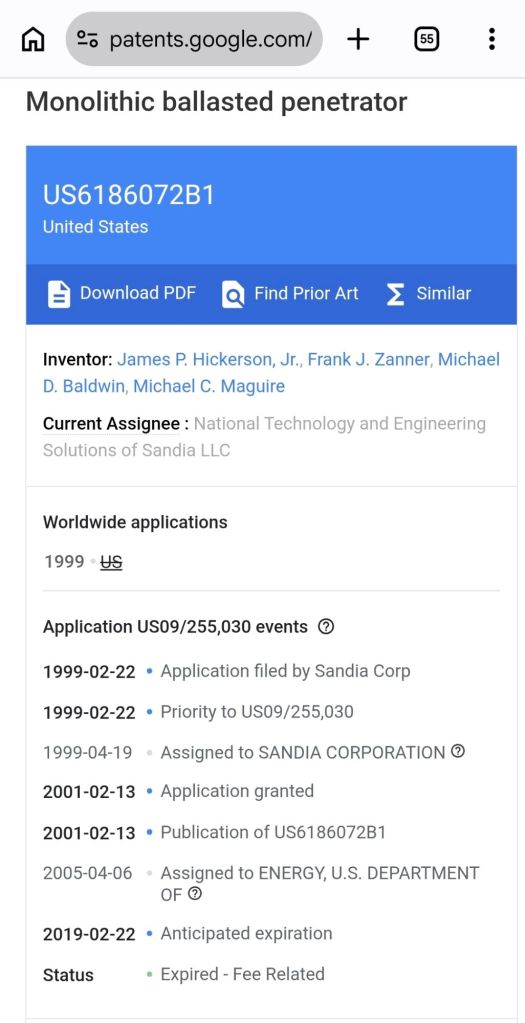
This patent from Sandia LLC proves it :
“In Ekbom’s invention the outer case is made out of a heavy metal alloy, such as tungsten or uranium alloy. The brittle behavior of these alloys will prevent this projectile from achieving deep penetration in hardened targets, when compared to cases made of high-strength and high-toughness steel alloys.”
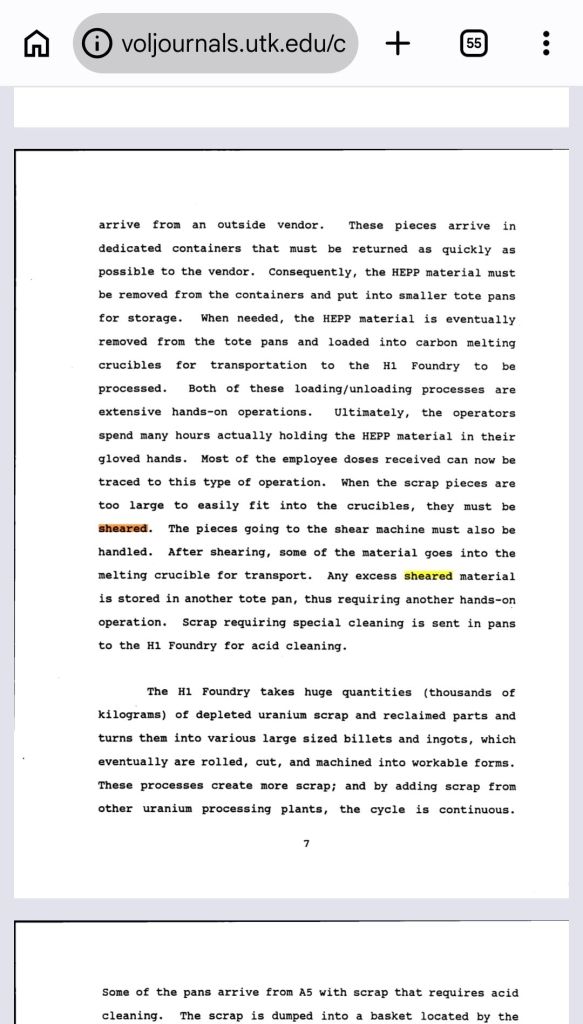
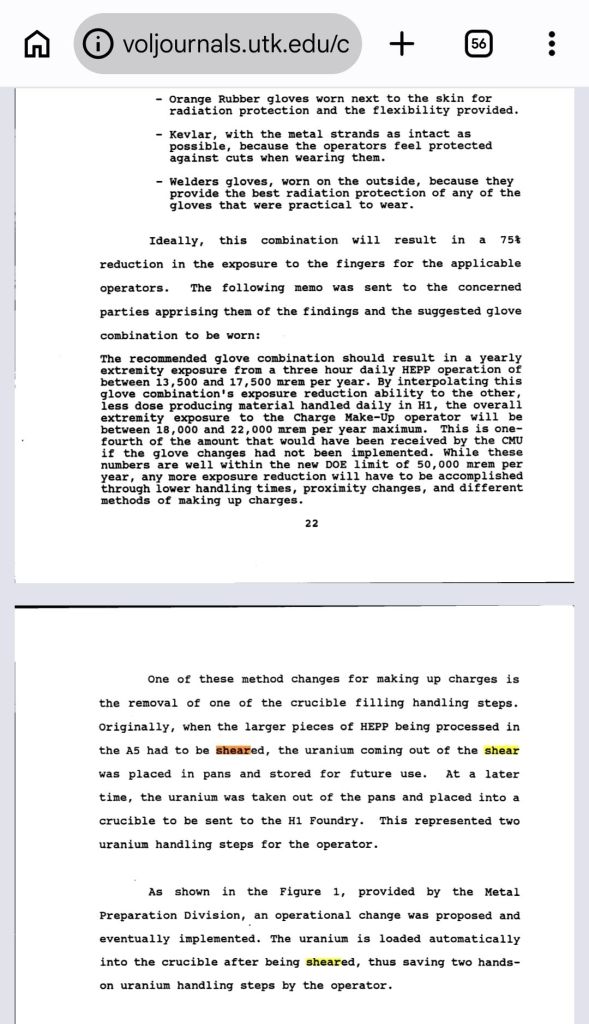
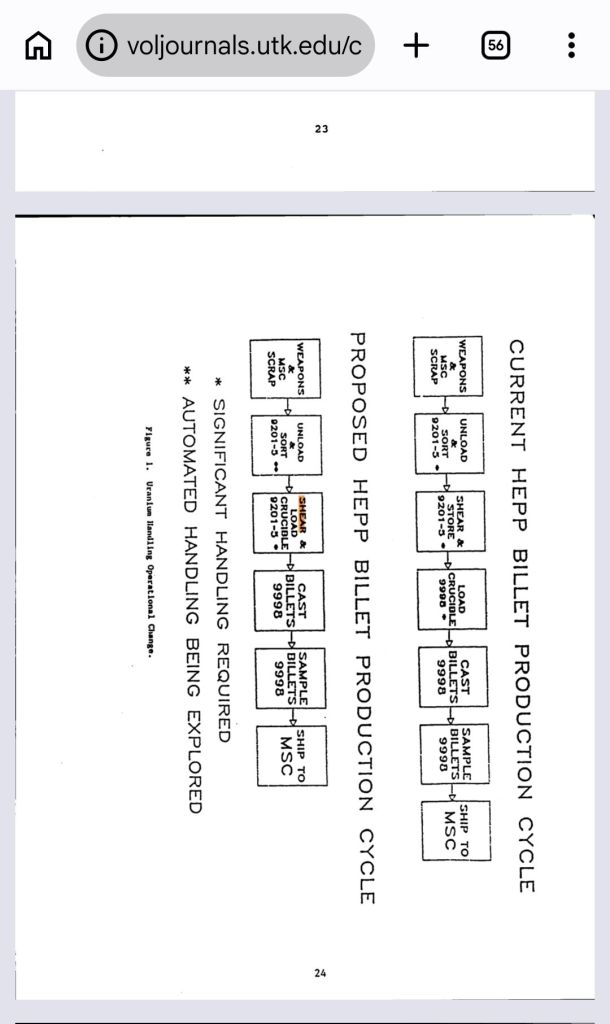
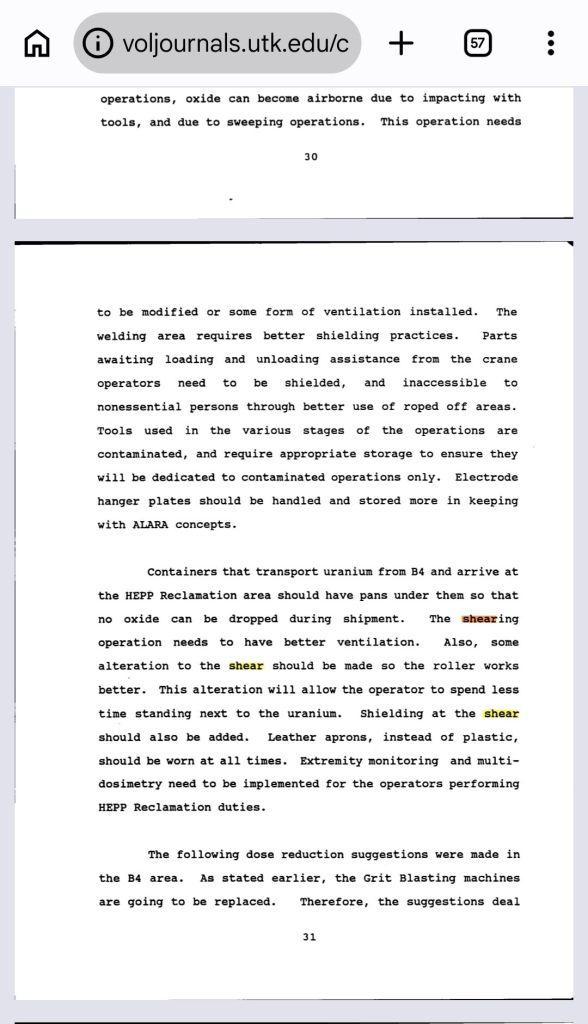
Indeed depleted uranium is sheared (frittage in French) for typical DU weapons manufacturing, as underlined by NATO.
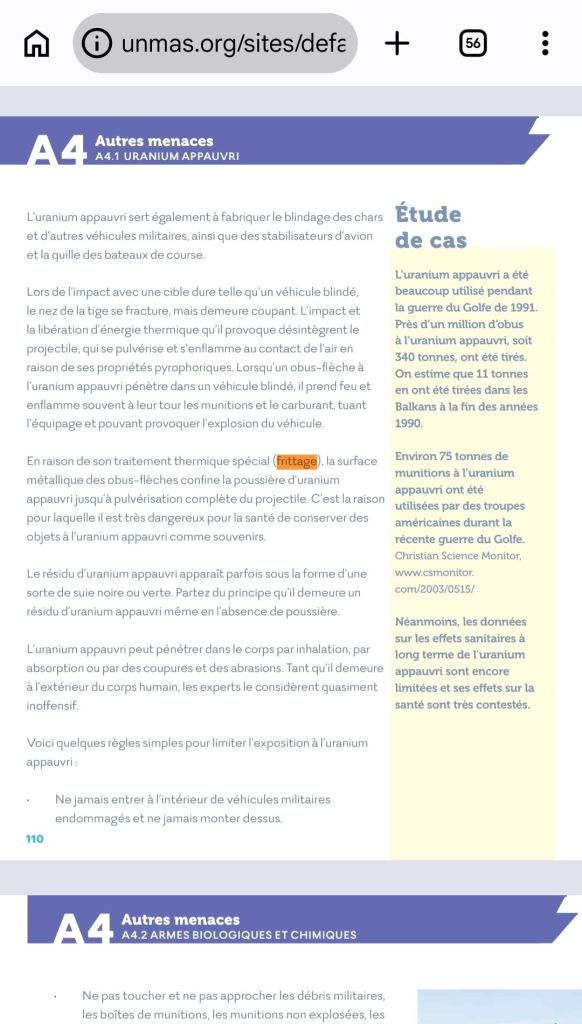
This means it is manufactured for maximum spreading of DU dust around and not for armour piercing. Let’s also see from Osti.gov the data from an old Lockheed depleted uranium manufacturing plant :
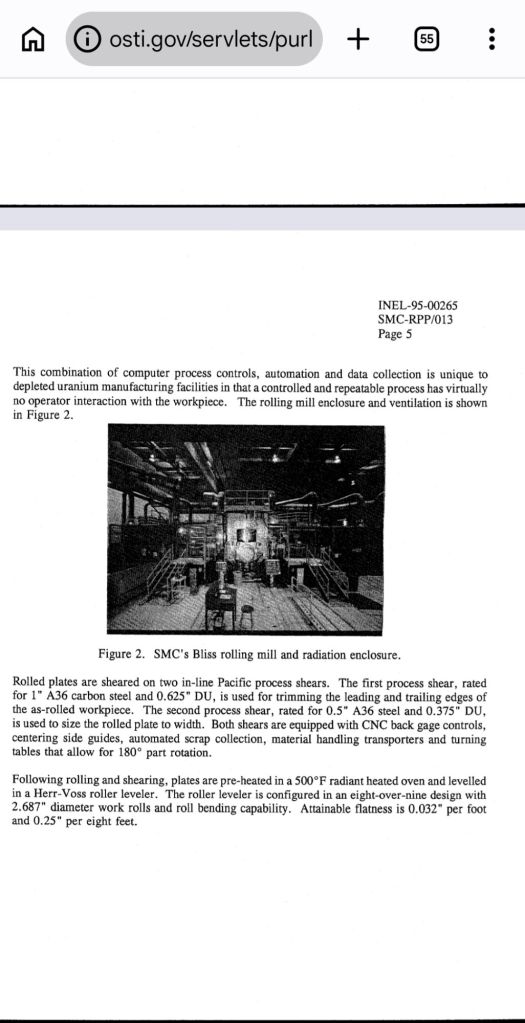
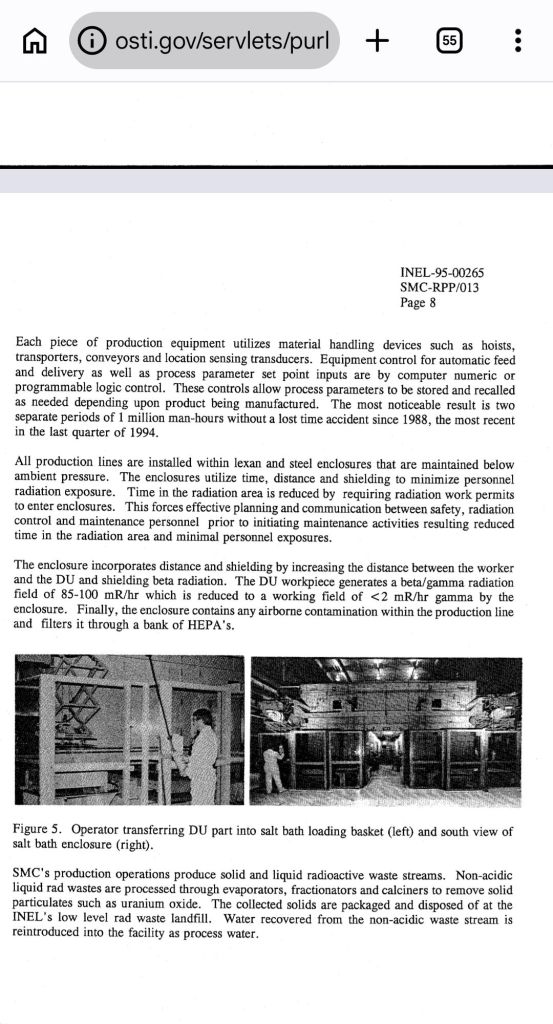
Let’s also see from the University of Tennessee… in 1991 !

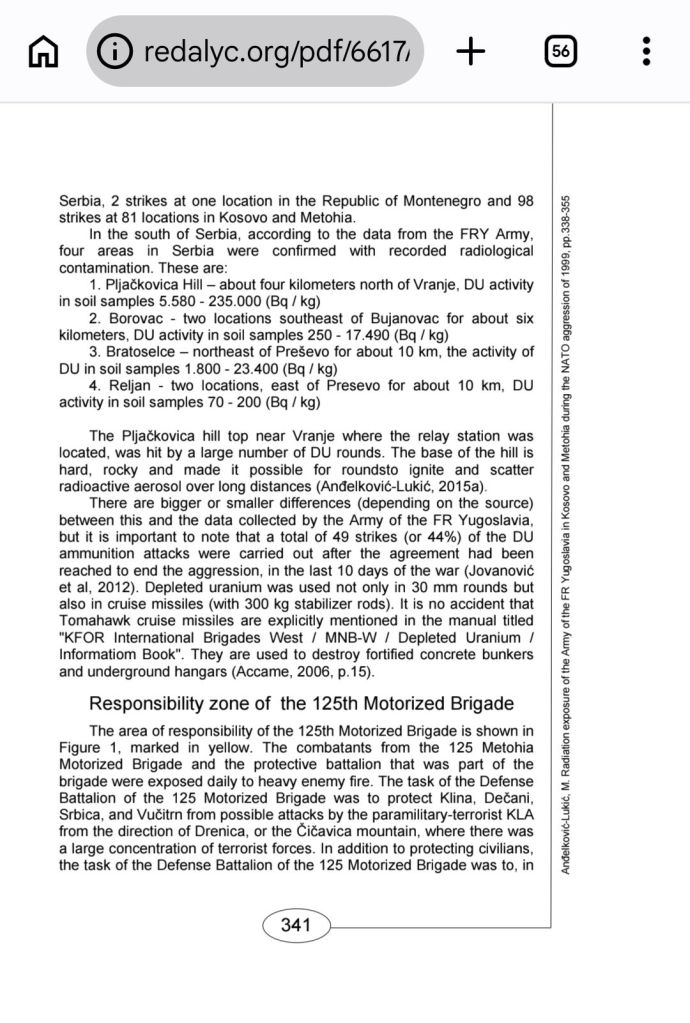
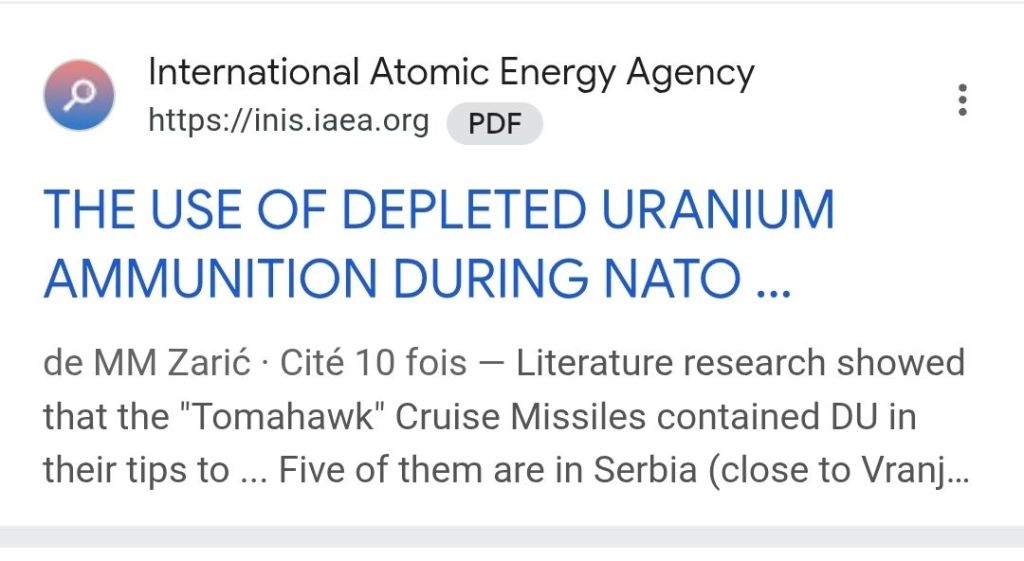
So the patent of the beginning shows something else : the distinction between payload and ballast. DU ballasts are not accounted for in standard international discussions about depleted uranium weapons, leading to the exclusion of antitank missiles and all other missiles from the discussions. Basically that “monolithic ballasted penetrator” is the Tomahawk‘s key patent, as underlined by NATO. Let’s also mention that DU can be also used in gyroscopes (7 or 8 kgs of DU, as underlined by NATO) and inertia wheels (20 kgs of DU, as confirmed by NATO). The patent recommends DU for the ballast but the implicit is that it shall not be sheared in that case (in this “monolithic” patent). It will still oxidise at impact and spread dangerous alpha-emitting nanoparticulates around though, as underlined by NATO. A Tomahawk “DU monolith” was also recovered once in Serbia.
It has to be reminded that since September 16th, 2019, NATO internally bans depleted uranium ammunitions wholly. This interdiction is enforced through death penalty. This is why, while the EU adhesion of Serbia is stalling, NATO and Serbia have developed an enhanced military cooperation.